Snow Is Melting… What Next for Your Succulents? A UK Guide to Frost Recovery
Winter can be tough on succulents, especially here in the UK where temperatures can swing from mild to freezing in a matter of hours. After a snowfall or frost, many growers look at their plants and wonder: “Are my succulents okay? What do I do now?”
Whether you’re caring for Aeoniums, Crassulas, or Echeveria, this step-by-step guide will help you assess damage, prevent rot, and encourage healthy regrowth; all using simple, practical methods.
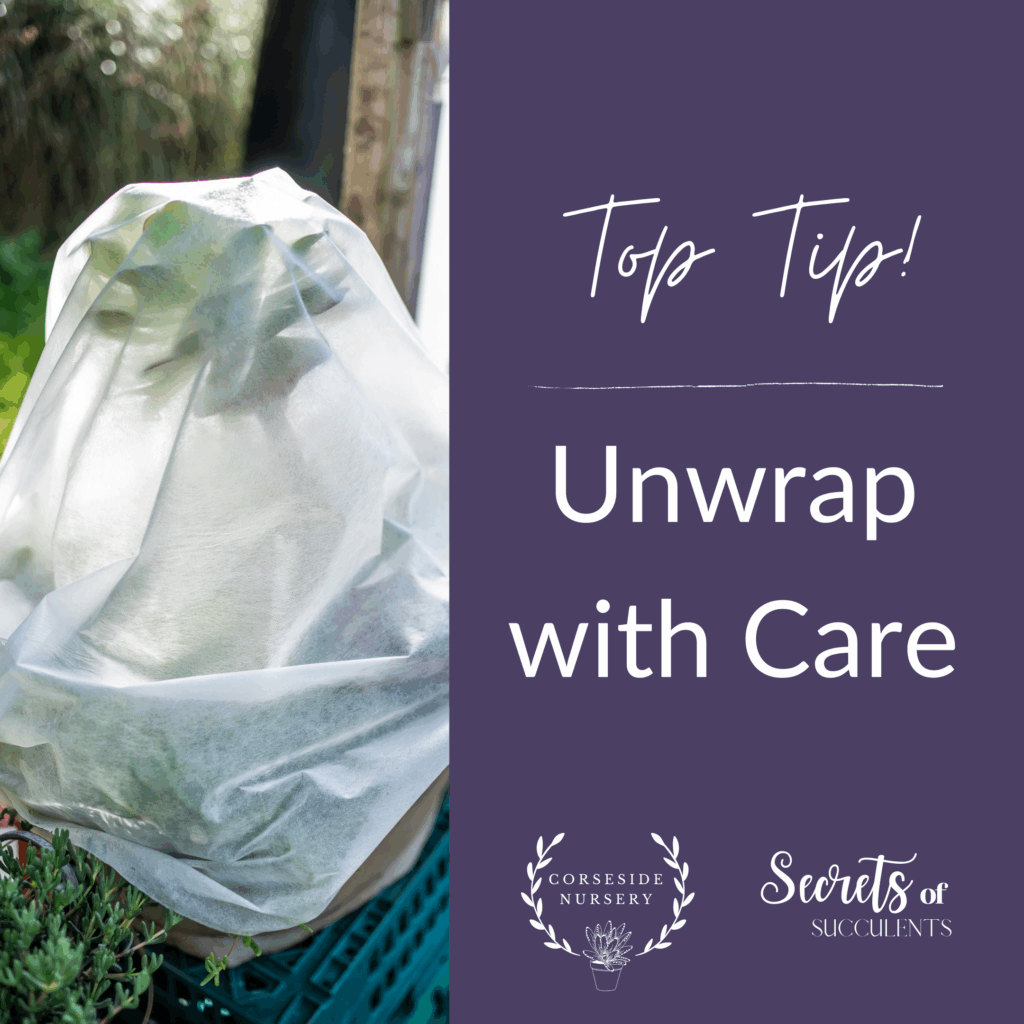
Why You Should Unwrap Succulents After the Frost Passes.
If you protected your succulents with fleece, bubble wrap, duvets, or makeshift shelters — brilliant! But once temperatures start climbing above freezing, it’s important to remove those layers.
Many succulents will stretch or soften if kept in darkness too long
How to unwrap safely
Remove protection cautiously if nights are still cold
Reintroduce natural light slowly — think soft launch, not sudden full sun
Avoid placing them in harsh midday light after being covered for days
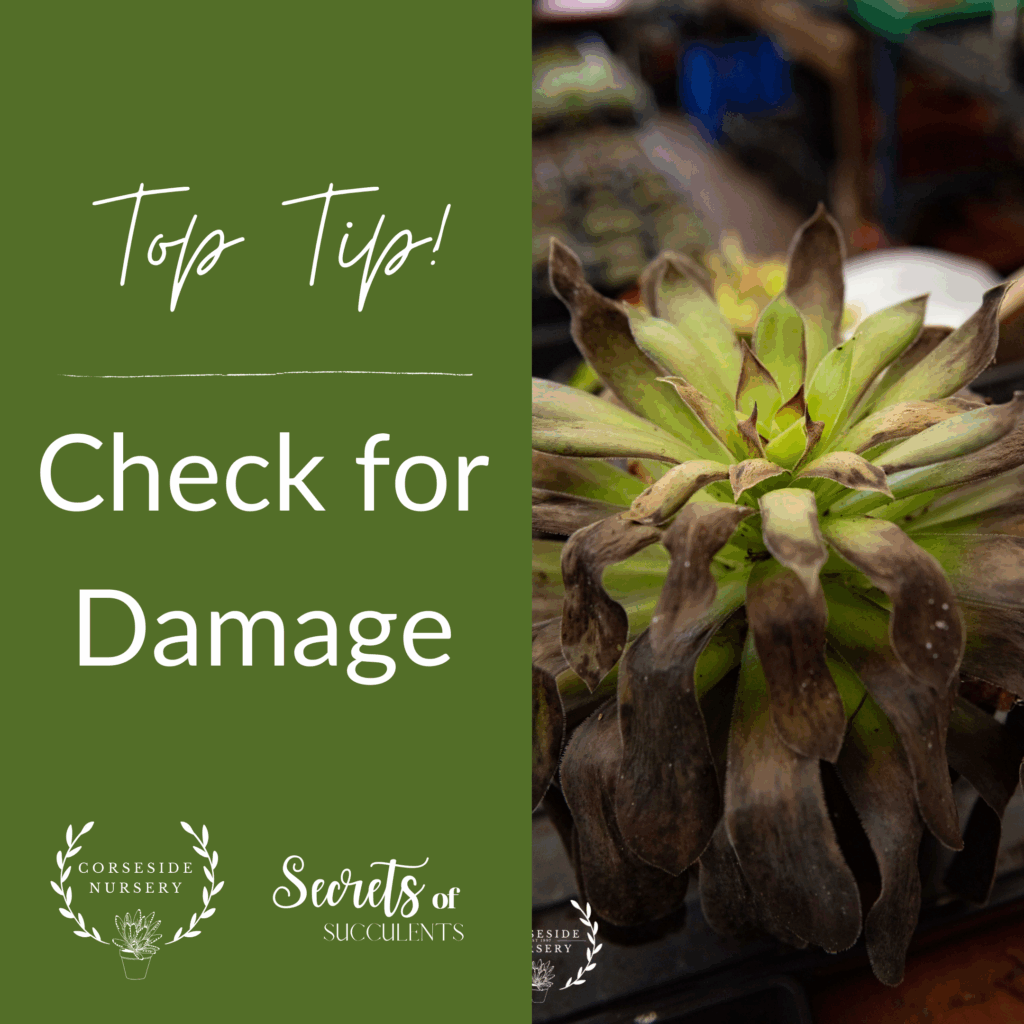
Check for cold damage
Cold or frost damage usually looks like:
Mushy or translucent leaves
Water-soaked, dark patches
Leaves that collapse at the slightest touch
The good news? Cold damage rarely means the whole plant is lost. If there is still firm, green growth in the centre then there is still hope.
Crassulas and many hardy succulents can often regrow fresh leaves even when the outer ones look terrible.
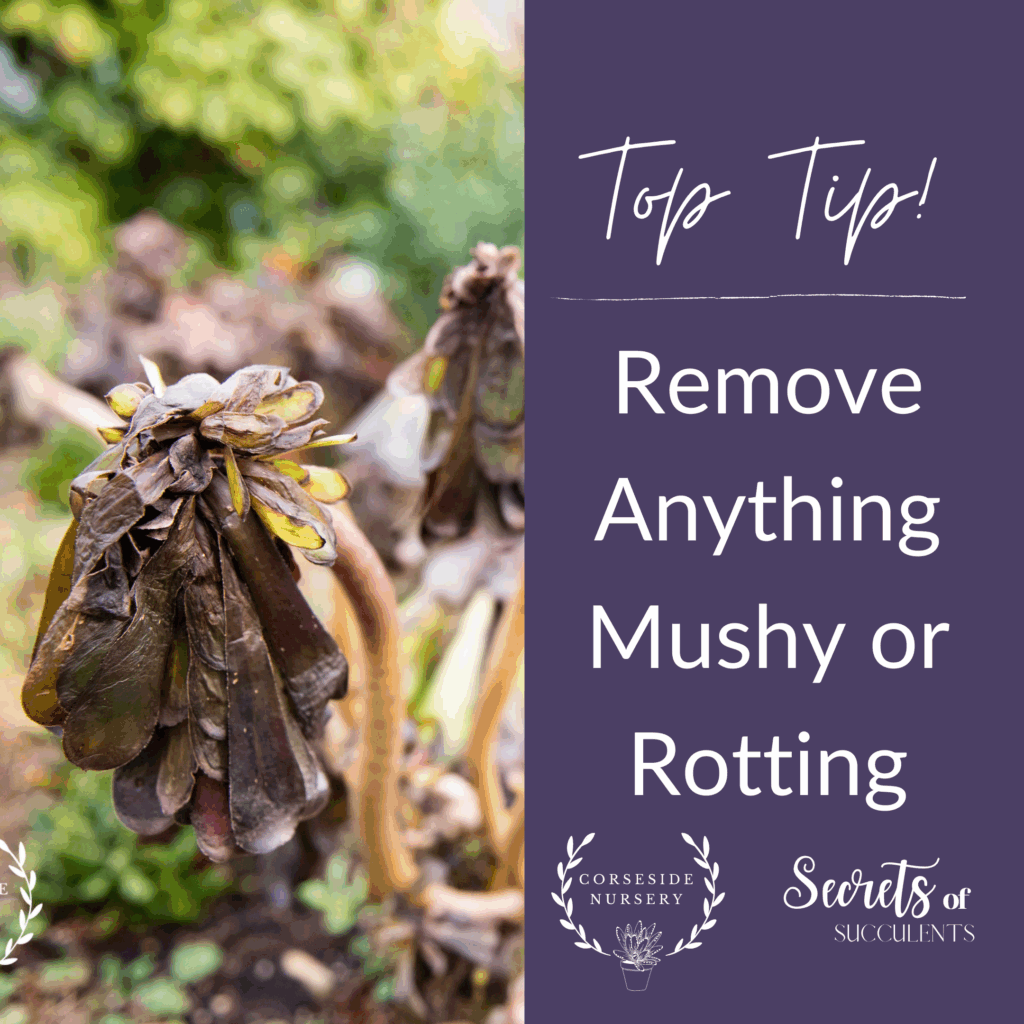
Remove Anything Mushy or Rotting
This is one of the most important recovery steps.
Once a leaf has turned mushy, jelly-like, brown, or translucent, it will not recover. Leaving damaged parts attached can cause rot to spread into healthy tissue.
How to remove damaged tissue
Gently pull off mushy leaves
Trim away rotted areas with clean scissors
Leave the plant to dry — no watering yet
This helps the plant redirect its energy toward survival and new growth.
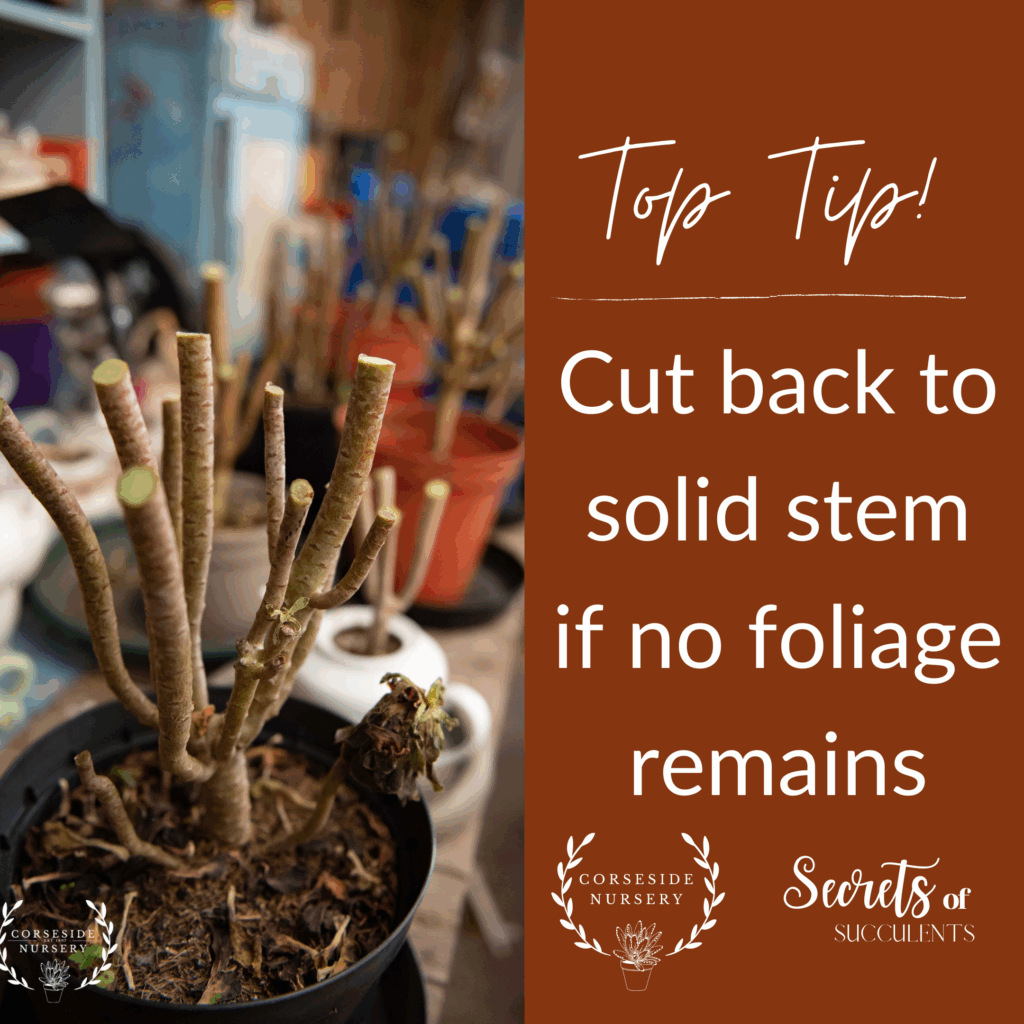
Cut Back to Solid Stem if the Plant Has Lost All Leaves
If an Aeonium, Crassula, or other succulent has dropped all its foliage after freezing:
Cut back the plant until you reach firm, healthy stem
Remove any sections that feel soft, hollow, or mushy
Succulents are incredibly resilient. Many will shoot out new growth from the remaining healthy stem weeks later (even if no foliage remains! – As pictured above).
Improve Airflow
Once temperatures rise above freezing, give your succulents a little air movement to help them dry and strengthen.
If they’re in a greenhouse or polytunnel:
Open vents or doors during the day (every day you can!)
Let moisture evaporate to prevent mould and mildew buildup
Even windowsill succulents benefit from fresher airflow.
Let Them Dry Out Completely
This is vital.
After frost damage, succulents do not need comforting water. Watering too soon is the quickest way to turn mild cold stress into a full-blown rot issue.
Only water when:
Temperatures are consistently above freezing
The soil is fully dry
The plant begins to show signs of new growth
Hold Off on Fertiliser
Even if you normally feed succulents, avoid any fertiliser right after winter stress.
Why?
Cold-stressed plants need to stabilise before they can use extra nutrients
Fertiliser can force weak, leggy growth
Recovery is about healing, not boosting
We don’t use fertilisers at all, but if you do, save it for spring time when the plant is actively growing again.
When in Doubt, Give It Time
A frost-hit succulent can look beyond saving… and then suddenly surprise you.
Unless:
the stem is mushy all the way through
the roots are black and rotten
…there is almost always hope.
Allow the plant a few weeks to respond before making any final decisions.
Ready to Replace Frost-Damaged Plants?
If your succulent didn’t make it, don’t loose heart! Growing succulents is a journey full of trial and error, especially when you’re learning what works best for your garden, your climate, and the facilities you have available. Even the most experienced growers can be caught out by particularly harsh winters. It’s all part of the process, and every setback is a chance to learn and improve for next season.
Corseside Nursery offers a range of UK-grown succulents, including
Aeoniums, Crassulas, Echeveria, Kalanchoe and a great selection of more hardy outdoor plants. Click below to visit the shop